Blog - The latest articles and news
Stay up-to-date with the latest industry news as our marketing teams finds new ways to re-purpose old CSS tricks articles.
Stay up-to-date with the latest industry news as our marketing teams finds new ways to re-purpose old CSS tricks articles.
by Kingdom Kode Team, Digital Innovation

You opened your second location expecting to double revenue. Instead you doubled the chaos — because you never built a way to manage multiple business locations' bookings and reviews as one operation.
Here's the truth nobody tells you when you scale: opening a second shop doesn't test your ambition. It tests your systems. And the systems that worked fine for one location quietly break the second you add a pin to the map. If you want to grow without bleeding money, you have to see the leaks first.
Growth doesn't create problems. It exposes the ones you already had.
One location running on duct tape looks like hustle. Two locations running on duct tape looks like a fire.

When you had one shop, you were the single source of truth. You knew the schedule. You saw the reviews. You answered the phone. Your brain was the system.
You can't be two places at once. So the second you open location two, every gap in your operation gets multiplied — and you start paying a tax on every booking, every review, and every search result. Most owners never see the invoice. They just feel it: revenue that should be there isn't.
Let's diagnose exactly where it's going.
Every leak below rolls up to one theme: fragmentation. Separate tools, separate habits, separate profiles — none of them talking. Here's where the money actually falls through.
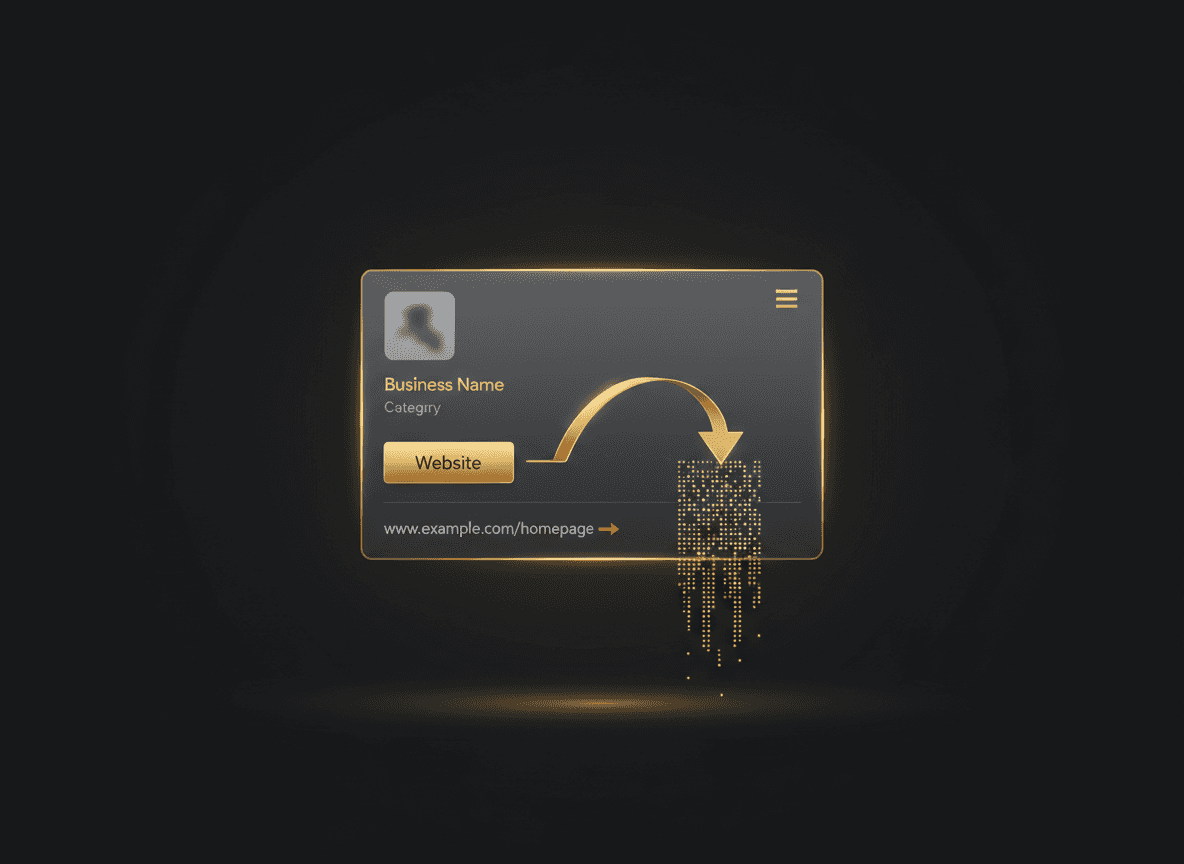
Location one uses one booking app because that's what you set up three years ago. Location two uses whatever the new manager liked. Now you've got two calendars, two logins, two sets of no-show rules, and zero combined view.
What this costs you:
Picture a salon doing, say, $40k/mo at each location. Two disconnected calendars can quietly cost it several bookings a week just because the systems don't talk. That's not a rounding error. That's rent.
The fix isn't "pick the better app." It's one booking system that treats your locations as one business with multiple doors.
Reviews are the single cheapest way to win the click on Google. And multi-location owners fumble them worse than anyone.
Here's the pattern. Imagine location one has 200 reviews because you nagged everyone for a year. Location two has 11 because nobody built the habit there. So when someone searches your service in the new neighborhood, you look like a startup — because to Google, you are.
The deeper problem: there's no system firing review requests automatically after every appointment, per location, to the right profile. It's a person remembering to ask. People forget. Systems don't.
What good looks like:
If you're not tracking review velocity per location, you're flying blind on the thing that decides whether new customers ever find you.
This one is quiet and expensive.
When you spin up a second Google Business Profile, three things go wrong constantly:
Read that last one again. You can rank perfectly, get the click, and still lose the customer because the button sends them to the wrong place. That's the most expensive kind of leak: you paid for the visibility and threw away the sale at the last step.
Each profile needs: a correct location-specific landing page, consistent NAP (name, address, phone), the right categories, and a link that actually converts. Not the homepage. A page built to turn that search into a booking.
Every leak above rolls up to one root problem: you don't have one place that tells you the truth about all your locations at once.
Ask yourself right now:
If answering those takes more than 30 seconds — or requires opening five tabs and texting a manager — you don't have a business with multiple locations. You have multiple businesses you happen to own, and none of them are talking.
That fragmentation is the real reason scaling feels like drowning. It's not the work. It's the lack of visibility into the work.
Stop thinking in apps. Start thinking in one engine.
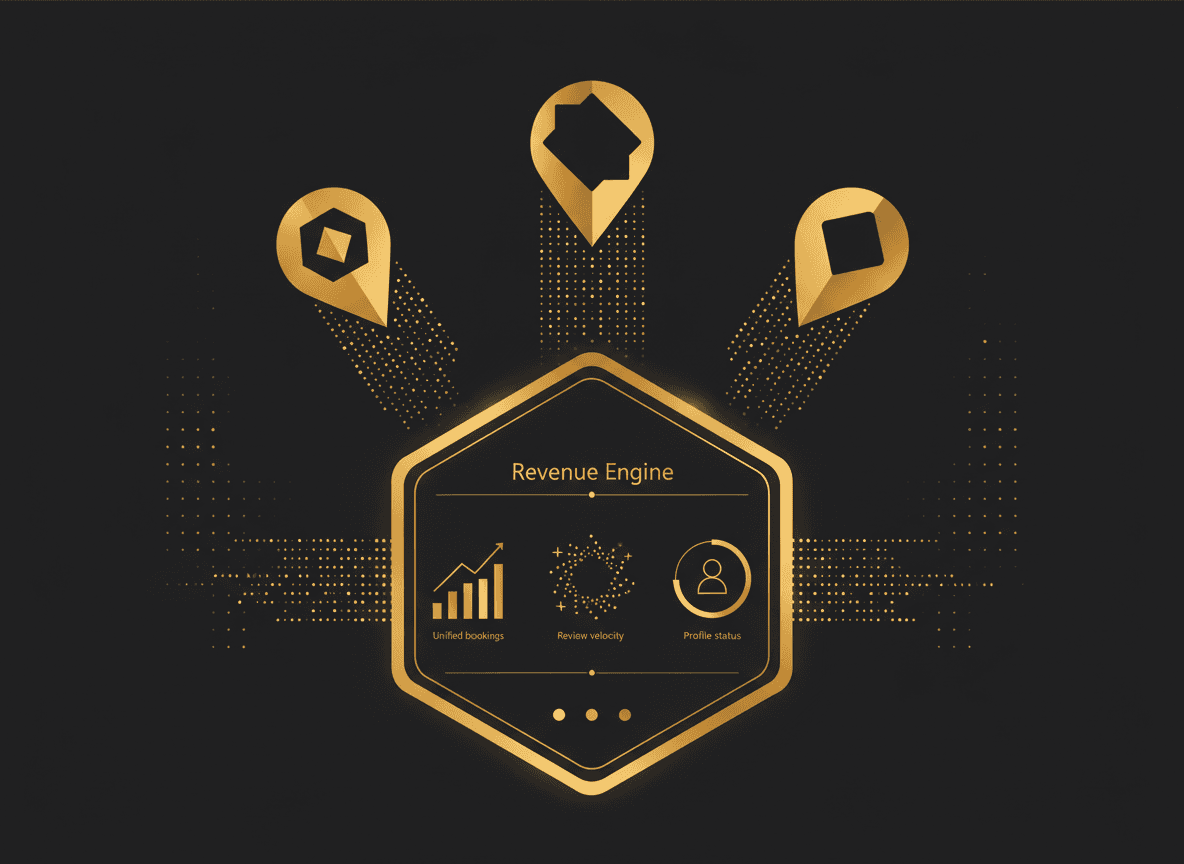
A unified Revenue Engine means:
This is the difference between owning a chain and babysitting a pile of shops. You built the second location to make more money. The engine is what lets it.
When your systems are unified, adding location three costs you a fraction of the effort location two did — because you're plugging into a machine instead of rebuilding one.
You can't fix what you can't see. Most owners try to patch one thing — a new booking app, a review tool — and wonder why the money still leaks. The leaks are connected. You have to scan them together.
Run your free Revenue Code Diagnostic. It scans each location's gaps at once — bookings, reviews, and Google profiles — and shows you exactly where the revenue is falling through. No fluff, no pitch you didn't ask for. Just the map of what's broken and what it's costing you.
Want to talk through what a unified Revenue Engine looks like for your business? Book a pricing call. Or dig into more breakdowns on the blog.
Growth exposed the cracks. Now go seal them.
Most SaaS founders treat the free trial as a waiting room. The ones converting at 25% or higher treat it as a structured sales system. Here is how to build that system.
Read moreA product roadmap tells you what you are building. A revenue engine tells you whether it is making money. Most SaaS founders only have one of these, and it is the wrong one.
Read more