Blog - The latest articles and news
Stay up-to-date with the latest industry news as our marketing teams finds new ways to re-purpose old CSS tricks articles.
Stay up-to-date with the latest industry news as our marketing teams finds new ways to re-purpose old CSS tricks articles.
by Kingdom Kode Team, Digital Innovation

It's December 22nd. Someone is on their couch, phone in hand, trying to buy a last-minute gift for their sister who loves your salon. They land on your website. They can book an appointment for themselves. They can see your hours. But there is no button that lets you sell gift cards online. For a salon owner, that missing button is one of the most expensive gaps on your entire site.
So they close the tab and buy an Amazon card instead.
You just lost a sale, the cash, and a brand-new customer — all in the three seconds it took them to realize you can't take their money. For a salon, spa, barbershop, or cafe, that gap quietly costs you the most during the exact window when buying intent is highest.
Most owners think of gift cards as a nice-to-have. They're not. They're a machine that does two profitable things simultaneously.
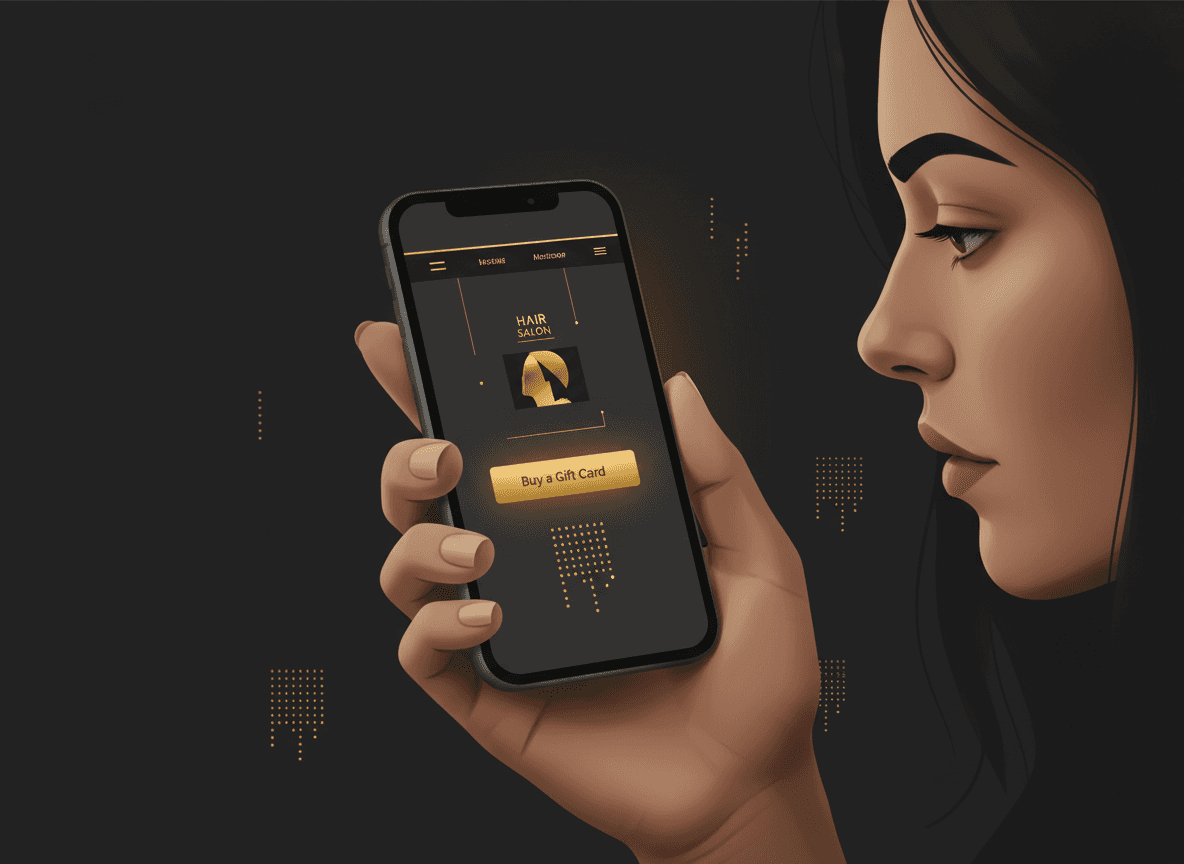
Job one: they pull cash forward. When someone buys a $150 gift card, you get $150 today for a service you deliver later — maybe weeks later, maybe never. That's an interest-free advance on future revenue. Sell 40 of those in December and you've got $6,000 of cash in the bank before you've picked up a single pair of scissors.
Job two: they hand you a customer someone else paid to acquire. The person redeeming the card usually isn't the person who bought it. A regular client just spent their own money to send you a friend, a partner, a coworker. Your customer acquisition cost on that new person is zero. You didn't run an ad. You didn't post on Instagram. Someone did your marketing for you and paid you for the privilege.
Name another marketing channel that pays you upfront.
Here's the part that makes gift cards quietly one of your best margin products: breakage.
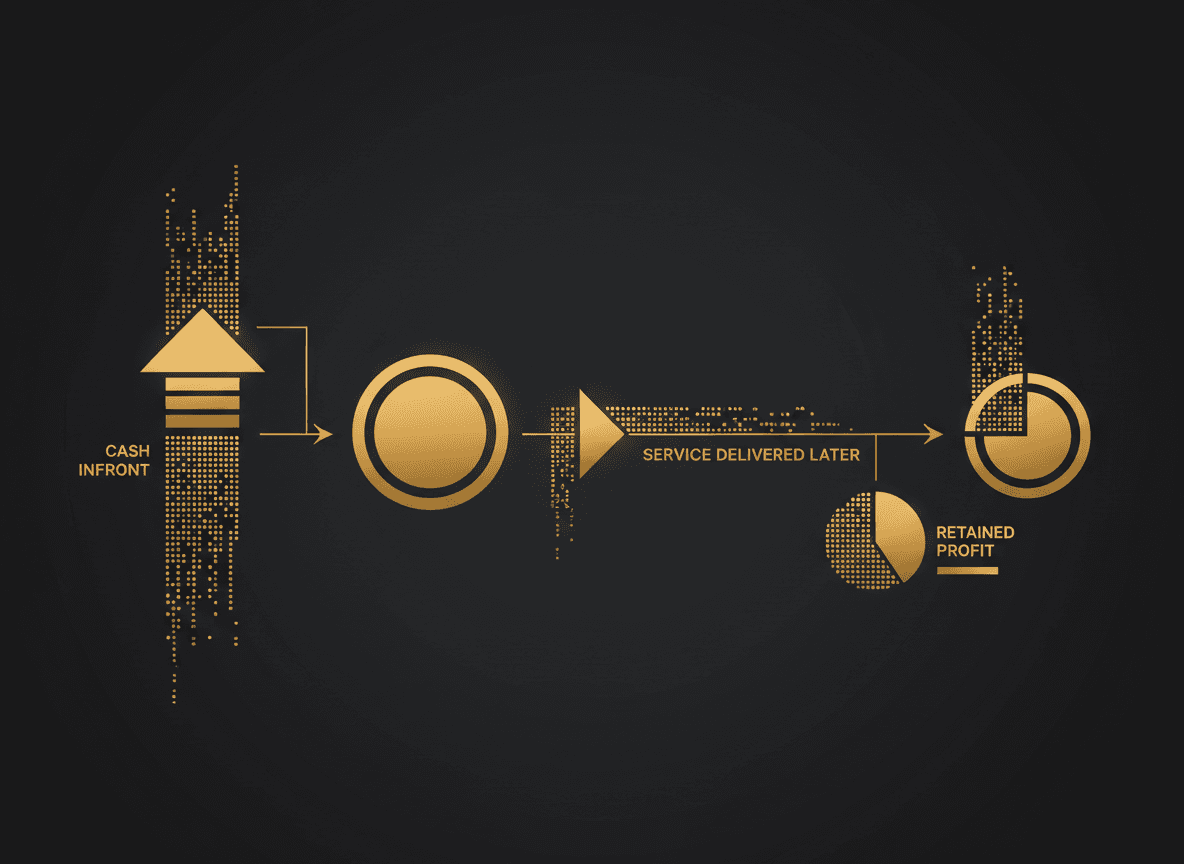
Breakage is the portion of gift card value that never gets redeemed. The card that sits in a wallet. The $150 card where they only spend $138 and forget the last $12. Some slice of gift card value tends to go unredeemed — and that money is close to pure profit because you never delivered a service against it. Treat that as an illustrative tailwind, not a number to bank on.
Let's frame it with a spa doing $30k/month. Say they sell $8,000 in gift cards over the holidays.
The point isn't to bank on breakage. The point is that even in the worst case — everyone redeems — you got the cash early and gained new customers. The upside only stacks from there.
Here's where owners bleed. They "technically" sell gift cards — you can call the shop, or walk in and grab a paper one.
That sounds fine until you look at when gift cards sell: nights, weekends, holidays, the exact hours your front desk is closed or slammed. Gift buying is impulsive and last-minute. It happens at 11pm two days before an anniversary.
Phone-only means someone has to call during business hours, wait, read a card number over the phone, and trust you'll mail something in time. Most won't bother. Paper cards require the buyer to physically show up.
Every one of those friction points is a lost sale during the single highest-intent gifting window of the year. You're not missing gift card revenue because people don't want to buy — you're missing it because you made them jump through hoops at the exact moment they were ready to pay.
A digital gift card sent instantly to an email, purchasable at midnight, closes that sale while the intent is hot.
Gift cards are step one. Prepaid service packages are the upgrade.
Instead of selling one visit, you sell a bundle: "6 haircuts for the price of 5," "a 4-session facial series," "10 coffees, get the 11th free." The customer pays upfront for future visits.
What this actually does:
A barbershop doing $30k/month that converts even 30 regulars onto a 5-cut prepaid package has just collected thousands in advance cash and guaranteed those clients keep coming back. That's the same cash-flow-forward and retention effect as gift cards, aimed at your existing base instead of new buyers.
Here's the catch. The reason your site can take appointments but can't sell any of this is simple: booking and selling are two different capabilities.
To sell gift cards online for your salon you need two things working together:
Most off-the-shelf booking tools were built to fill your calendar, not to sell products. So the money that wants to come to you at 11pm on December 22nd has nowhere to land.
That's a fixable problem. And it's usually a fast one.
Go to your own website right now. Try to buy a gift card as if you were a customer. If you can't do it in under 60 seconds on your phone, you're leaking sales every single week — and hemorrhaging them every holiday.
The free Revenue Code Diagnostic checks exactly this: whether your site can take payments, sell gift cards and packages, and turn browsers into cash. It shows you the specific gaps costing you money.
Run your free Revenue Code Diagnostic →
Want to see what a proper storefront-plus-payments setup would look like for your shop? Book a pricing call or read more on the blog.
Most SaaS founders treat the free trial as a waiting room. The ones converting at 25% or higher treat it as a structured sales system. Here is how to build that system.
Read moreA product roadmap tells you what you are building. A revenue engine tells you whether it is making money. Most SaaS founders only have one of these, and it is the wrong one.
Read more