Blog - The latest articles and news
Stay up-to-date with the latest industry news as our marketing teams finds new ways to re-purpose old CSS tricks articles.
Stay up-to-date with the latest industry news as our marketing teams finds new ways to re-purpose old CSS tricks articles.
by Kingdom Kode Team, Digital Innovation

You typed your own business into Google last week. You scrolled. You didn't find yourself until page three — under a competitor, a directory, and a Yelp page you don't control.
That's the moment most owners ask the same question: why can't customers find my business online?
Here's the uncomfortable answer. It's not one broken thing. When a scan comes back almost entirely blank — no Google Business Profile, no reviews, no ads running, no measurable website traffic — you're not looking at a checklist. You're looking at a machine with no parts installed. We call it the ghost business. You exist. Customers just can't see you.
Most advice treats visibility like a chore list: "set up your Google profile, get some reviews, maybe run ads." Do them whenever.
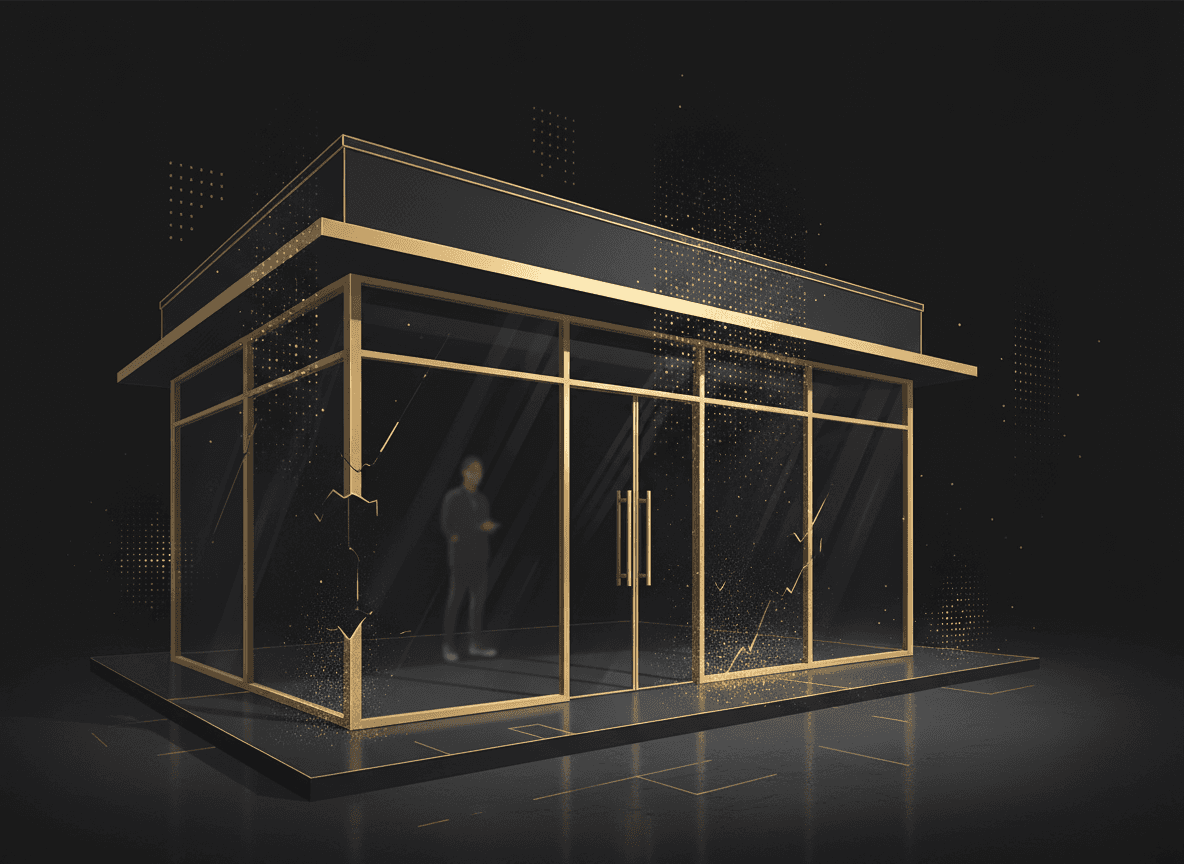
That's wrong, and it's why owners spin for months and feel like nothing moves.
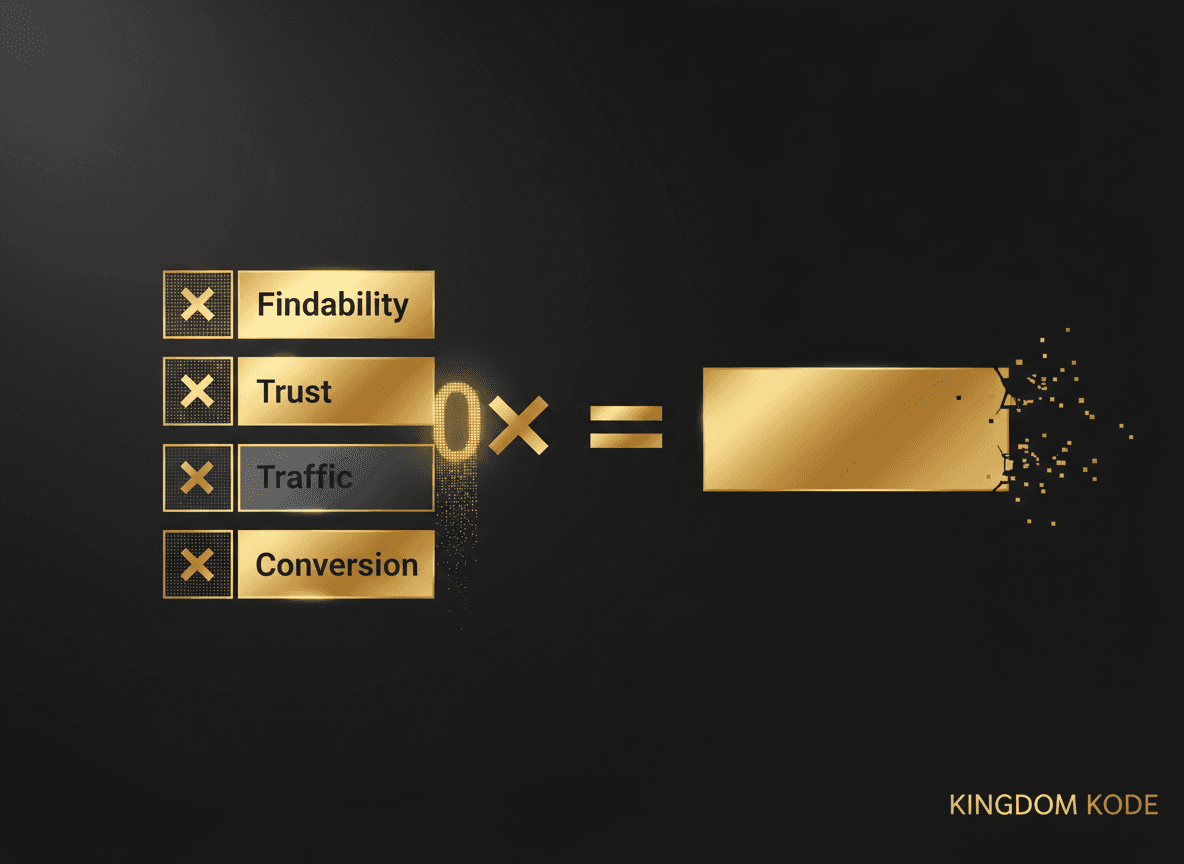
Visibility isn't additive. It's multiplicative. Each layer feeds the next. Miss one and you don't lose 25% — you kneecap everything downstream.
Think of it like this:
Findability × Trust × Traffic × Conversion = Customers
If any one of those is zero, the whole equation is zero. A gorgeous website (great conversion) with no Google presence (zero findability) still equals zero customers. That's why the ghost business feels so frustrating. You might have done one thing well — but one strong layer multiplied by three missing ones is still nothing.
Roughly, when someone searches "barber near me" or "emergency plumber," Google shows a map pack before it shows anything else. No profile? You're not in the race. You don't rank low — you don't appear.
And here's the compounding part: no profile means no place for reviews to land. Which starves Layer 2.
A business with zero reviews next to a competitor with 200 loses every time — even if you're better. People don't buy "maybe." They buy proof.
But you can't collect reviews at scale if there's no profile to collect them on. And thin trust means the traffic you do get bounces. Which starves Layer 3.
Ads, local SEO, referrals with a place to send people. This is how you stop waiting to be found and start showing up on demand.
But running ads to a business with no reviews and no clear booking path is like pouring water into a bucket full of holes. You'll pay for clicks that never convert. Which exposes Layer 4.
Can a stranger, in under ten seconds, figure out what you do, that you're trusted, and how to book? If your site is a digital brochure with a phone number nobody calls, that's a leak, not a store.
See the chain? Each missing layer doesn't just fail on its own. It poisons the well for the layer after it. That's the ghost business trap — and it's also the way out.
Because it's a multiplier, order matters more than effort. Fix layers in the wrong sequence and you waste money. Here's the sequence that stops the bleeding fastest.
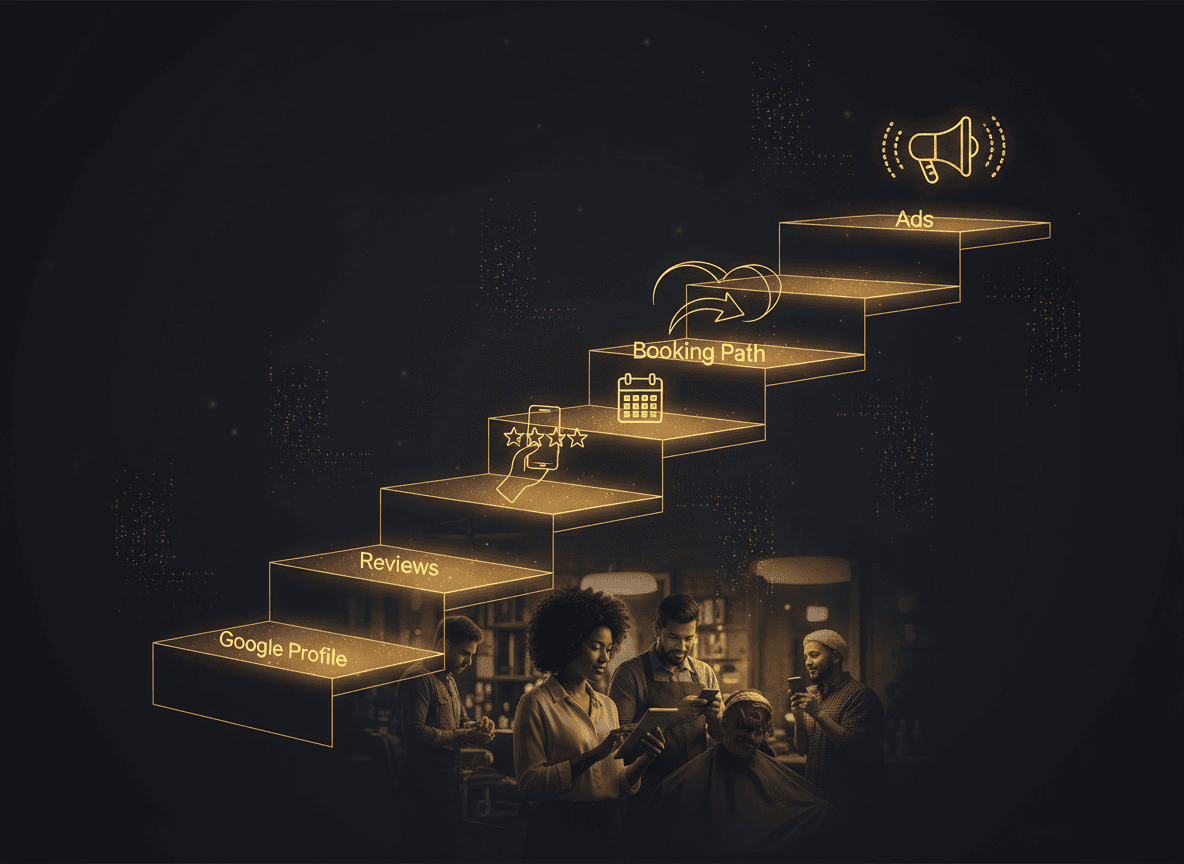
1. Claim and complete your Google Business Profile — this week. Categories, hours, photos, service area, a booking link. This is the single highest-leverage hour you'll spend. It's free. It makes you exist.
2. Turn on a review engine. Not "ask when you remember." A system: every completed job or visit triggers a request with a direct link. A barbershop doing $30k/mo sees dozens of customers a week — that's dozens of review opportunities being thrown away right now.
3. Make the booking path idiot-proof. One obvious button. Works on a phone. Fewer than three taps to a confirmed appointment. Fix this before you spend a dollar on ads.
4. Only now, buy traffic. With findability, trust, and conversion in place, ads and local SEO multiply instead of leak. You're pouring water into a bucket that holds.
Do it in this order and each layer you add makes the previous one worth more. That's the compounding working for you instead of against you.
A ghost business isn't a business that's failing. It's a business with unrealized demand and zero infrastructure. The demand is already there — people are searching for what you sell today. You're just not in the room when they look.
That means the gap between where you are and "booked out" is often shorter than it feels. You don't need a rebrand or a bigger budget. You need the layers installed in the right order.
But first you need to know exactly which layers are missing — and which broken one is quietly zeroing out the rest.
Stop guessing why customers can't find you. The free Revenue Code Diagnostic scans your Google presence, reviews, visibility, and site — and shows you exactly which layers are blank and which one to fix first for the biggest lift.
Run your free Revenue Code Diagnostic. It takes minutes, and if your scan comes back mostly blank, that's not bad news — it's the clearest map you'll ever get.
Want a human to walk you through the results? Book a pricing call or read more teardowns on the blog.
Most SaaS founders treat the free trial as a waiting room. The ones converting at 25% or higher treat it as a structured sales system. Here is how to build that system.
Read moreA product roadmap tells you what you are building. A revenue engine tells you whether it is making money. Most SaaS founders only have one of these, and it is the wrong one.
Read more