Blog - The latest articles and news
Stay up-to-date with the latest industry news as our marketing teams finds new ways to re-purpose old CSS tricks articles.
Stay up-to-date with the latest industry news as our marketing teams finds new ways to re-purpose old CSS tricks articles.
by Kingdom Kode Team, Digital Innovation
Every booking goes through your phone. Every invoice, you send by hand. Every rebooking lives in your head. If you want to know how to grow my business without doing everything myself, start here: the answer is almost never "work harder." You're already maxed. The problem is that your business can't function without you standing in the middle of every transaction.
You are the bottleneck. And a bottleneck doesn't scale.
Here's the brutal math. If every customer has to reach you to buy, your revenue ceiling is however many conversations you can personally have in a day. Take a Tuesday off and the money stops. Get sick and the money stops. That's not a business — that's a job you can't quit.
You don't have a marketing problem. You have a plumbing problem. Look for these four:
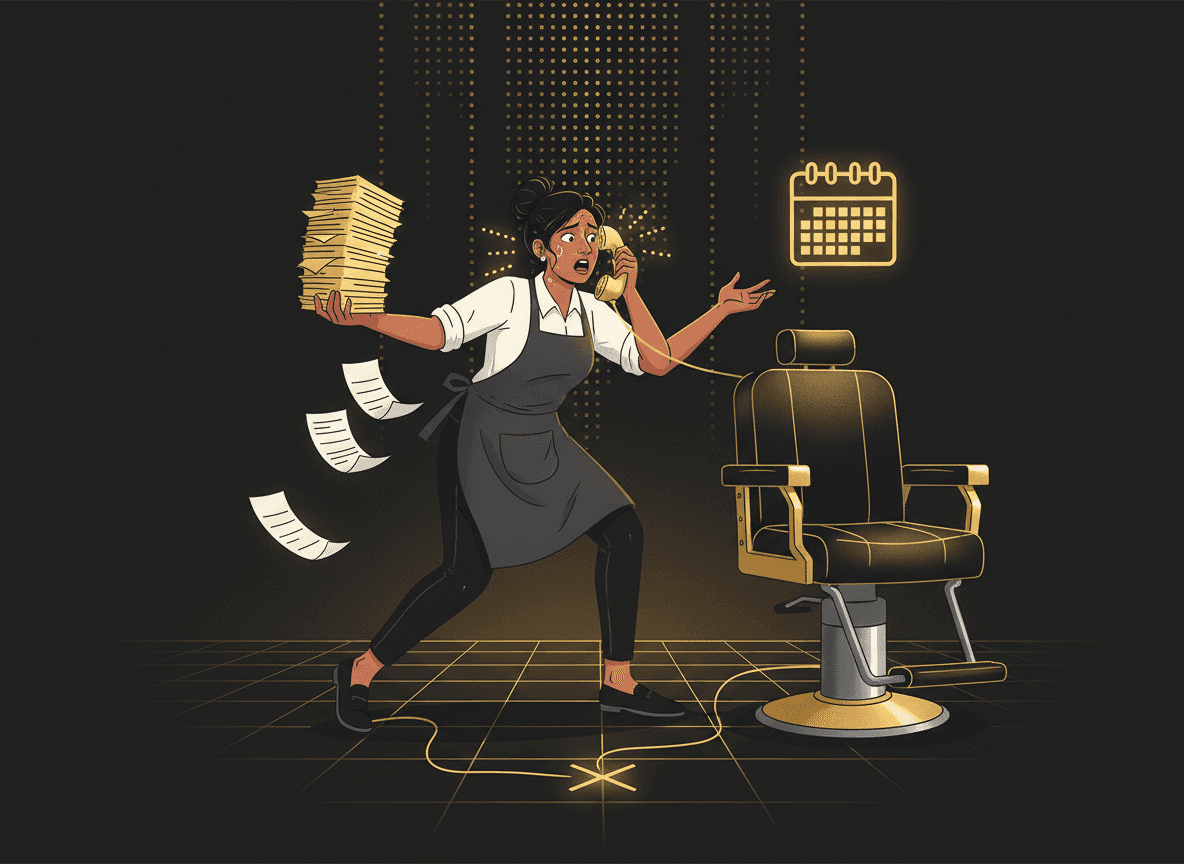
1. Phone-only booking. Customers can only book by calling or texting you. Miss the call, miss the sale. Picture a hypothetical barbershop doing $30k/mo that only books by phone — it leaves money on the table every time the chair is full and the phone rings unanswered.
2. Manual invoicing. You create and chase every invoice yourself. That's 30 seconds to send and sometimes 3 follow-ups to collect. Multiply by 80 clients a month and you've built yourself a second unpaid job.
3. Memory-based rebooking. You remember to text the client who's due for a refill, a re-up, a 6-week trim. Which means you forget half of them. Repeat revenue you already earned, walking out the door because there's no system reminding them to come back.
4. No system of record. Ask yourself: if you lost your phone right now, would you lose your business? If the customer list lives in your head and your text threads, you don't own a business — you're renting one from your own memory.
If three of those four sound like you, you're not lazy or disorganized. You're structurally trapped. And no amount of hustle fixes a structural problem.
Think of your business as a pipe. Money flows from a customer's intent to buy → to the actual sale. Right now, you are a narrow section of that pipe. Every dollar has to squeeze through your attention.
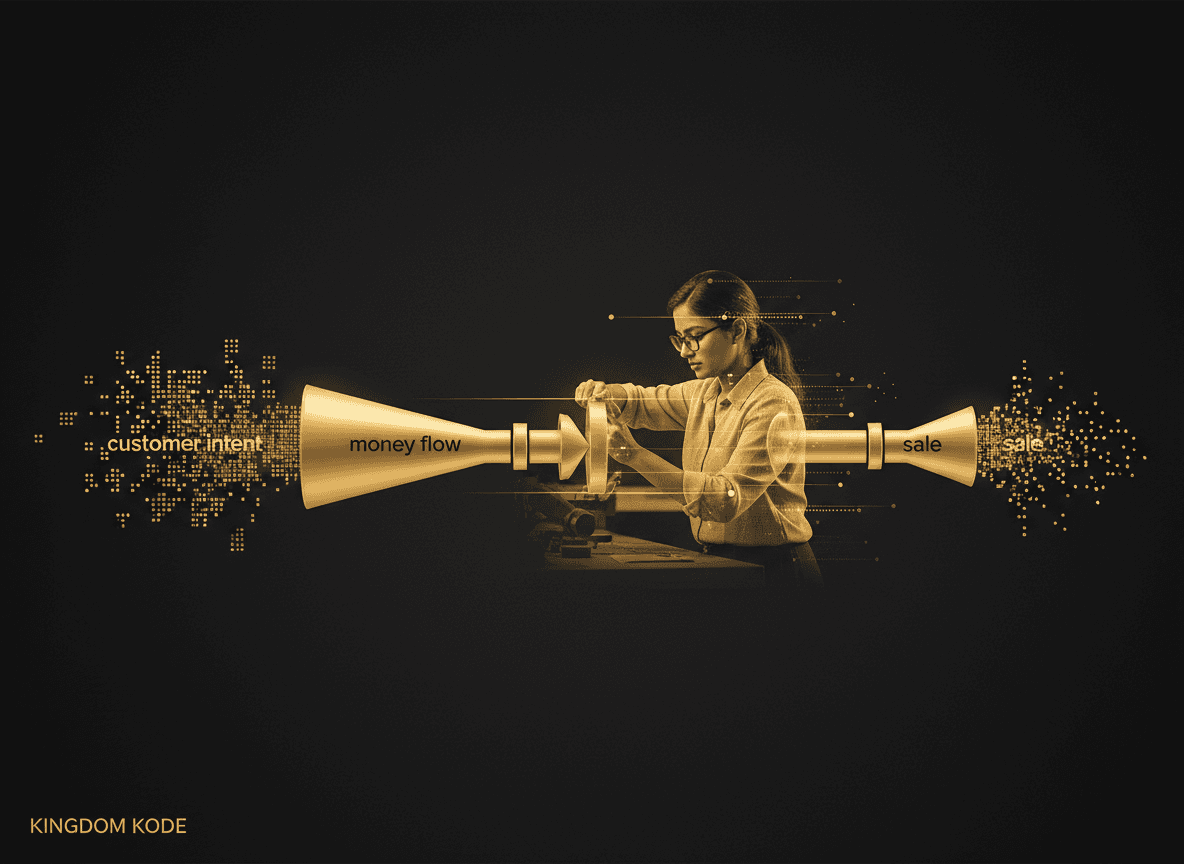
So two things happen. One, you cap out — you can only push so much through yourself in a week. Two, everything downstream of you leaks: the customer who wanted to book at 9pm when you were asleep, the invoice you forgot to send, the client you meant to text back.
The overwhelmed owner's instinct is to work more hours. But adding hours to a clogged pipe doesn't widen the pipe. It just burns you out faster while the ceiling stays exactly where it is.
Let's put a number on it. Say you spend two hours a day on booking coordination, invoicing, and follow-up texts. That's 10 hours a week — roughly 40 hours a month — of your time on tasks a system could do for free while you sleep.

Worse than the hours is the leakage. The after-hours bookings you never captured. The invoices that get paid late or never get paid at all because nobody's chasing them. The repeat clients who drifted because nobody reminded them. That's not a small tax. That's often the difference between a business that grows and one that's stuck at the same number for three years.
You can't hire your way out of it either, not at first — because you can't hand off a process that only exists in your head. First you have to get it out of your head and into a system.
The fix is to take yourself out of the transaction loop entirely. Not out of the business — out of the plumbing. That's what we mean by installing a Revenue Engine. Three moves:
Self-serve booking. Customers book themselves, 24/7, from a link. They pick the slot, they get the confirmation, they get the reminder. The 9pm booker who used to slip away now books while you're at dinner.
Automatic payment. Invoices and deposits fire on their own. Card on file, auto-charge, automatic receipts. You stop being an unpaid accounts-receivable clerk.
Automatic rebooking and follow-up. The system remembers who's due back and reaches out for you. Your repeat revenue stops depending on your memory on a busy day.
When those three run without you, something clicks: the business can take a booking, take a payment, and bring a customer back — while you're on a beach. That's the whole point. You didn't build a business to be its bottleneck.
This is the core of what we install for owners through our Systems Retainer and the Zero-to-Hero program — going from doing everything yourself to owning a machine that runs. Book a pricing call to see how it maps to your business. But you don't need us to start diagnosing it today.
Don't try to automate all four symptoms at once. Find the one that's bleeding the most.
Fix the biggest leak, prove the money it recovers, then move to the next. That sequence is exactly what turns an owner-dependent job back into a business.
You probably already sense which task is eating you alive. The diagnostic tells you for sure — and shows you which owner-dependent tasks are costing you the most revenue right now.
Run your free Revenue Code Diagnostic. It takes a few minutes, it's free, and it names your bottleneck in plain numbers.
Want to talk through the fix after? Book a pricing call or read more breakdowns on the blog. Either way — stop being the narrowest part of your own pipe.
Most SaaS founders treat the free trial as a waiting room. The ones converting at 25% or higher treat it as a structured sales system. Here is how to build that system.
Read moreA product roadmap tells you what you are building. A revenue engine tells you whether it is making money. Most SaaS founders only have one of these, and it is the wrong one.
Read more